Who is involved?
The real estate department of Axel Vervoordt with the help of three architect teams - Bogdan & Van Broeck, Coussée & Goris and Stéphane Beel - together with landscape architect Michel Desvigne.
Contribution to the objective 'buildings and infrastructures'
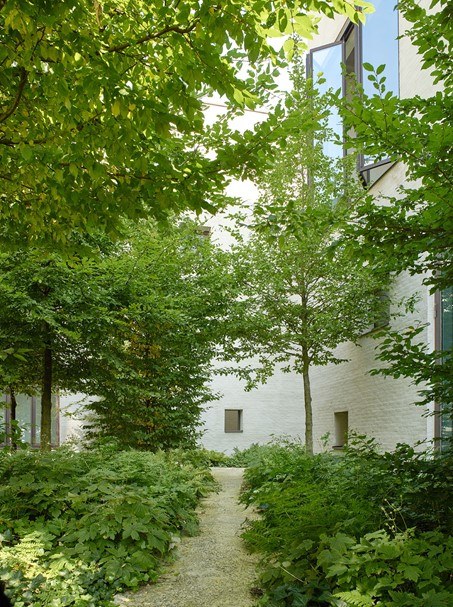
The new project on the site includes a large number of green roofs (both extensive and intensive) as well as in-ground gardens. The total site measures 23,000 m².In addition to the approximately 7,800 m² of paving, terraces and buildings (excluding green roofs) the site offers:
- ± 2000 m² in-ground garden area
- ± 6200 m² extensive green roofs on buildings
- ±3000 m² intensive green roofs (substrate thickness 80 cm) hosting tall rooftop trees
15 out of 18 buildings have green roofs
green zone in the underground car park = ± 3,500 m²
How are the criteria met?
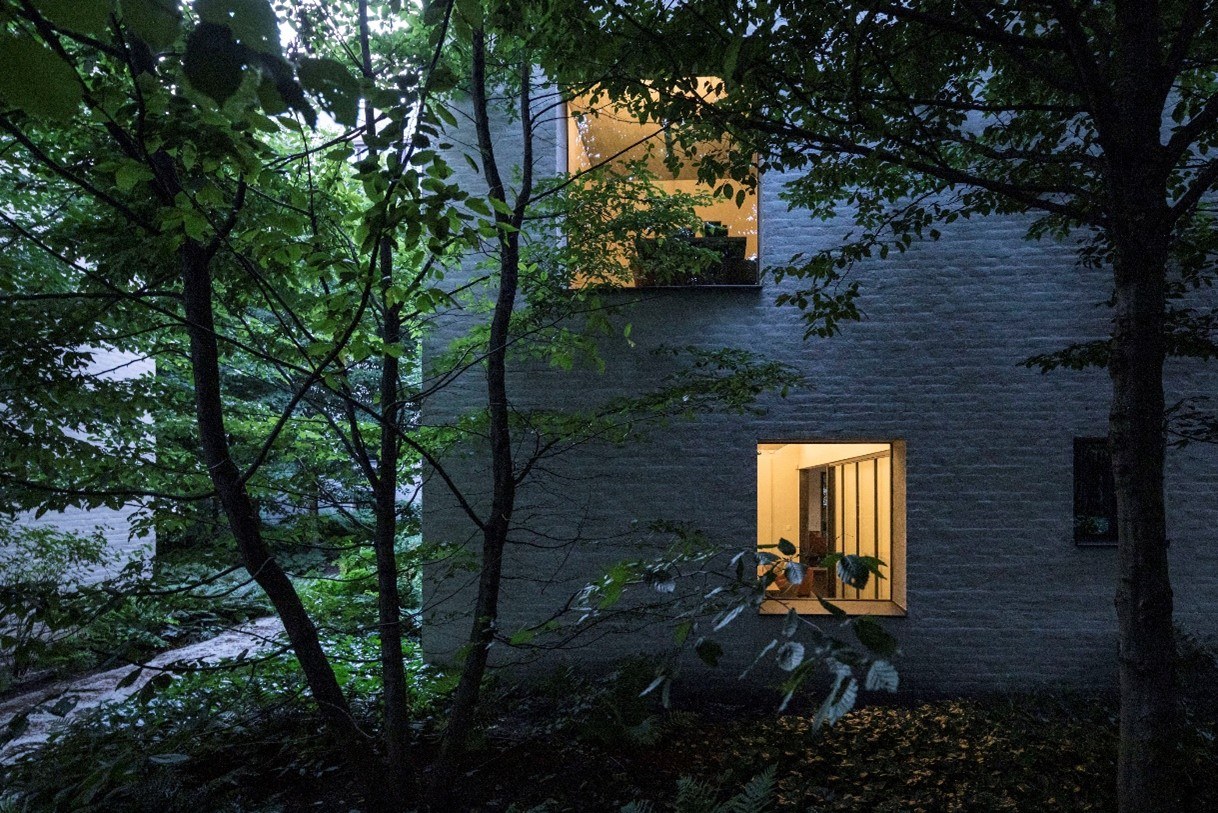
The extensive green roofs and green-blue developments use different species and thus reproduce biodiversity in order to promote biodiversity and integrate environmental and ecological qualities in the best possible way. The green roofs actually create an urban ecosystem. A reed pond completes the green-blue network.
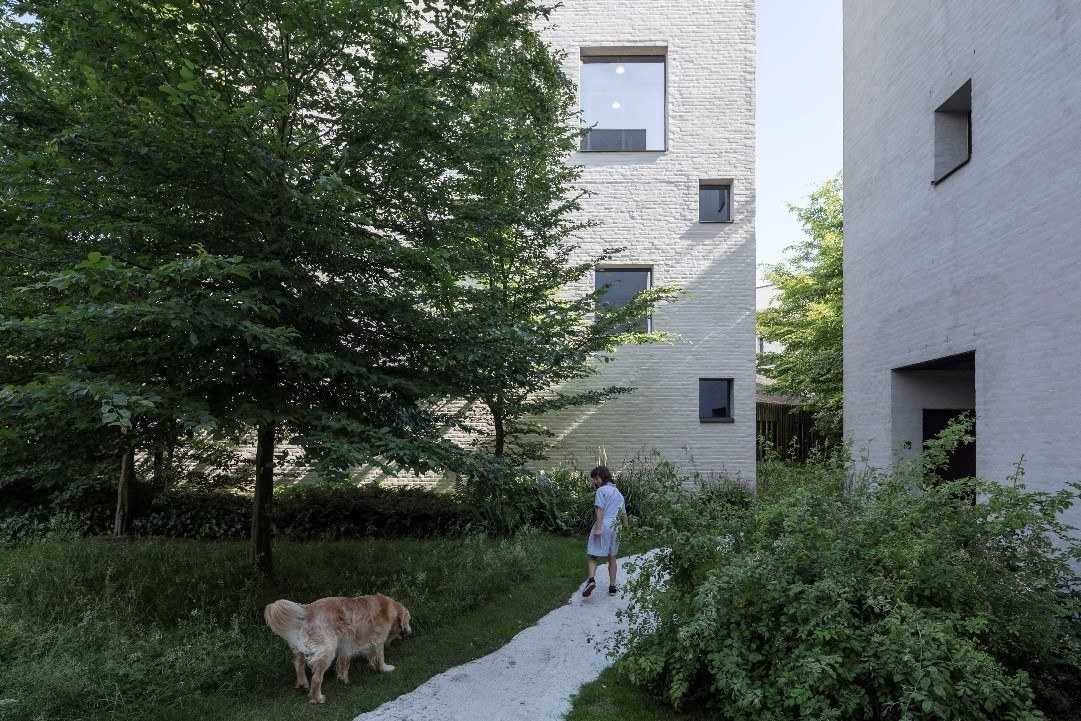
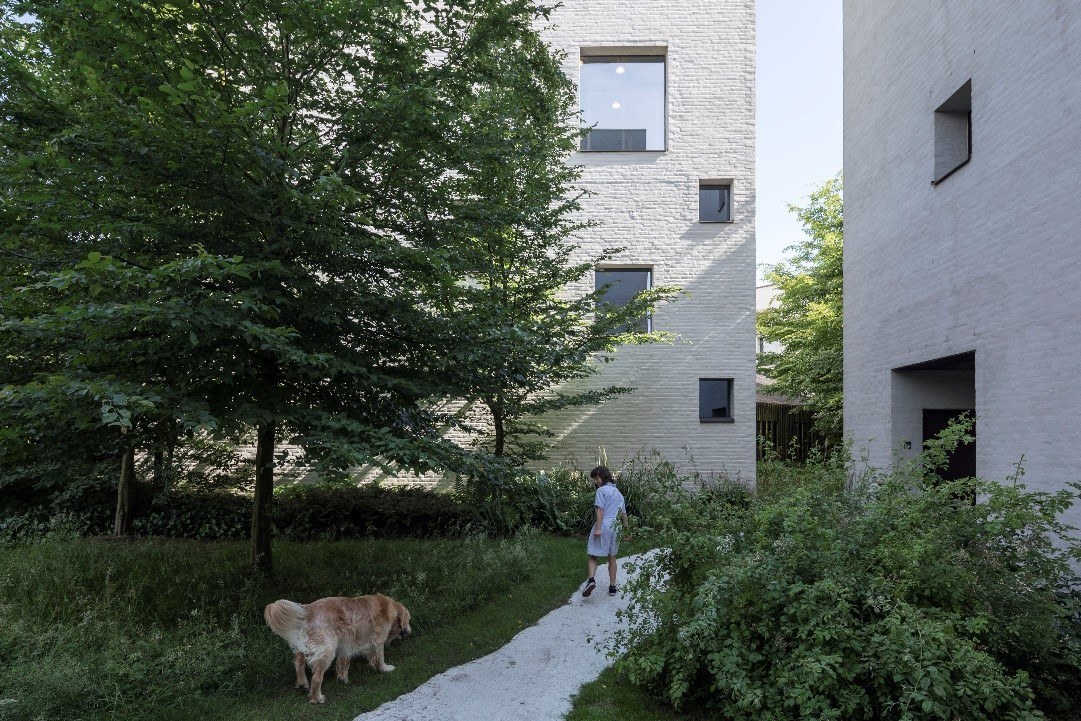
Urban rewilding transformed the grey infrastructure (former distillery) into a green-blue living environment.
The rewilded area is almost maintenance-free (no mowing, little or no pruning, ...) and drains ALL rainwater via an aquifer to the phreatic groundwater table. Consequently, the green management is mainly natural and therefore beneficial for the biodiversity of the area.
Benefits
The commitment to green-blue systems and networks is an urban ecosystem in itself. The landscaping, i.e. the vegetation, is biodiverse and accommodates additional fauna. At the same time, the project contributes to a number of important changes for society. It proves that you can live qualitatively in a former industrial brownfield. It also shows that very high building density goes perfectly with lockdown-compatible living near biodiversity, promising peace, quiet and privacy.
In addition, this development project contributes to combating the phenomenon of heat islands and soil sealing in urban areas. It also helps to purify the air, thanks to the proximity of vegetation.
For more information about the Kanaal project, please visit the website: https://www.kanaal.be/